

1. Introduction: Is Your VPN Really Protecting Your Privacy in 2026?
Imagine browsing the internet, sending private messages, researching sensitive topics, or accessing financial accounts while believing your VPN is keeping you completely anonymous. Your connection is encrypted, your real IP address is hidden, and your internet service provider cannot easily see which websites you visit. Everything seems secure.
But there is a problem: encryption does not automatically make you anonymous.
Even when your internet traffic is encrypted, certain patterns can reveal useful information. The timing of your connections, the volume of data transferred, and the relationship between incoming and outgoing traffic can sometimes help sophisticated observers infer what you are doing online.
That is where the debate surrounding NymVPN vs ExpressVPN 2026 becomes particularly interesting.
These two VPN services approach online privacy from fundamentally different directions.
ExpressVPN represents the established VPN model. It encrypts your internet traffic, masks your IP address, and routes your connection through a network of VPN servers. Its Lightway protocol, RAM-only TrustedServer technology, and user-friendly applications make it an appealing choice for people who want everyday protection without complicated configuration.
NymVPN takes a different approach. Its decentralized architecture offers two connection modes, including a five-hop mixnet designed to make traffic analysis significantly more difficult. Instead of focusing exclusively on encrypting traffic and hiding your IP address, NymVPN also attempts to obscure the patterns that could connect your online activities to your identity.
However, stronger anonymity comes with a practical trade-off: additional routing, traffic mixing, and artificial delays can increase latency.
So, which deserves your money in 2026?
Is NymVPN the best privacy VPN 2026 for people who want advanced anonymity, or does ExpressVPN remain the smarter choice for streaming, browsing, and everyday cybersecurity?
In this comprehensive comparison, we will examine their technologies, privacy protections, speed, streaming capabilities, pricing, and overall value. We will also identify the situations in which choosing the wrong VPN could leave you paying for features you rarely use.
The goal is simple: help you choose the VPN that genuinely fits your needs rather than the one with the most impressive marketing.
2. Quick Summary: NymVPN vs ExpressVPN 2026
Before examining each service in detail, here is a quick overview of their most important differences.
| Feature | NymVPN | ExpressVPN |
|---|---|---|
| Architecture | Decentralized network with multiple independent operators | Centralized VPN service infrastructure |
| Main technology | Two-hop decentralized VPN and five-hop privacy mixnet | Lightway protocol and traditional VPN tunneling |
| Speed | Fast mode is designed for everyday use; mixnet mode prioritizes anonymity | Designed for fast, responsive connections |
| Privacy | Advanced metadata protection in Anonymous mode | Encryption, IP masking, RAM-only servers, and audited privacy commitments |
| Server coverage | Distributed network with advertised locations that may change | Extensive advertised server-location coverage |
| Streaming | Fast mode may work; compatibility can vary | Strong general-purpose streaming option |
| Torrenting | Fast mode is more practical for bandwidth-heavy transfers | Suitable for conventional high-speed transfers |
| Annual pricing | An advertised annual plan has been listed at $48 total; verify current pricing | Premium pricing that varies by plan and promotion |
| Best for | Privacy-focused users concerned about traffic analysis | Everyday users seeking convenience, speed, and compatibility |
Important: Speed, streaming compatibility, and performance depend on your location, network, selected server, and connection mode. These comparisons describe each service’s design and intended strengths rather than claiming a controlled, side-by-side laboratory result.
Which VPN should you choose?
- Choose NymVPN if protecting communication patterns and reducing the ability to correlate your identity with your online activity are your priorities.
- Choose ExpressVPN if you want a straightforward VPN for browsing, travel, streaming, and routine online security.
- Compare both carefully if you want a balance of privacy, speed, and price.
3. What Is NymVPN? A Deep Dive Into Decentralized Privacy
Understanding NymVPN’s decentralized architecture
NymVPN is a privacy-focused virtual private network developed around decentralized routing technology. It offers two different ways to route internet traffic: Fast mode and Anonymous mode.
Fast mode uses a two-hop decentralized VPN architecture based on AmneziaWG, a WireGuard-derived protocol. Anonymous mode uses Nym’s five-hop mixnet, which introduces traffic mixing, randomized delays, and cover traffic.
This distinction is essential when evaluating the NymVPN review 2026 landscape.
A conventional VPN generally sends encrypted traffic through a VPN server before forwarding it to the destination website. The VPN server can see information needed to route the connection, including your originating IP address and the destination you are contacting, even though HTTPS continues to protect the contents of properly encrypted web sessions.
NymVPN’s Anonymous mode attempts to make that relationship much harder to establish.
What is a mixnet, and why does metadata matter?
Think of a conventional VPN as sending a sealed envelope through a trusted delivery company. The contents are protected, but the delivery company still needs some routing information.
Now imagine sending that envelope through several independent sorting facilities. Each facility handles only part of the journey, and the envelope’s timing, appearance, and movement are deliberately made harder to track.
That is a simplified explanation of a mixnet.
Nym’s Anonymous mode uses five routing hops: an entry gateway, three mix nodes, and an exit gateway. The mix nodes combine traffic from multiple users and introduce randomized delays. The system also uses fixed-size Sphinx packets and cover traffic, which creates additional activity that makes real communication patterns more difficult to identify.
This is intended to protect metadata, including patterns that could help an observer infer:
- When a person is communicating.
- How traffic flows between different points.
- Whether observed connections might belong to the same communication session.
- Whether periods of network activity correlate with a particular online action.
Metadata protection is not the same as making all information invisible. A website you visit can still receive information needed to deliver its service, and your device, browser, account logins, or endpoint malware can expose identifying information.
Nevertheless, reducing traffic correlation is a meaningful difference between a mixnet and a conventional VPN tunnel.
What is NymVPN’s status in 2026?
NymVPN is an established privacy-focused service rather than simply a theoretical privacy project. Its service offers desktop and mobile applications, and its development focuses on improving usability while balancing anonymity against latency.
One important feature is the ability to adjust certain aspects of mixnet performance. Stronger mixing can improve resistance to traffic analysis, but it can also introduce additional delays and data overhead.
This flexibility is useful for privacy enthusiasts who understand the trade-offs. However, users should not assume every configuration provides precisely the same level of protection.
Speed and usability: The honest trade-off
NymVPN is not a single-purpose slow VPN. Its Fast mode is designed for more conventional internet use, including everyday browsing and streaming.
Anonymous mode has a different objective. Its multiple hops, packet mixing, randomized delays, and cover traffic are intended to obscure communication patterns rather than maximize throughput.
Consequently, it is better suited to latency-tolerant activities such as private communications than to competitive gaming or high-definition streaming.
For ordinary users, the distinction is straightforward: use Fast mode when responsiveness matters, and consider Anonymous mode when metadata protection matters more than speed.
NymVPN pros and cons
Pros
- Decentralized routing distributes trust among independent network operators.
- Anonymous mode is designed to resist traffic correlation and timing analysis.
- Fast and Anonymous modes accommodate different privacy requirements.
- Privacy-oriented payment options may be available.
- Mixnet configuration options provide flexibility for balancing anonymity and speed.
- The advertised annual plan can be competitive with premium conventional VPN subscriptions.
Cons
- Anonymous mode is less suitable for latency-sensitive applications.
- Streaming performance and access to particular platforms may be inconsistent.
- Users may need to learn the difference between the two connection modes.
- Decentralized infrastructure can introduce variability in node availability and performance.
- A VPN cannot protect against every tracking technique, compromised device, or account-based identifier.
Who should buy NymVPN?
NymVPN is worth considering if your main concern is not simply hiding your IP address but also making your communication patterns harder to analyze.
Privacy researchers, journalists, security-conscious users, and people handling sensitive communications may appreciate its approach. However, individuals facing serious surveillance threats should evaluate their entire security setup rather than relying on any single VPN.
Recommended for: Privacy-first users who understand that stronger anonymity can require slower connections.
4. What Is ExpressVPN? Features, Performance, and Premium Pricing
Why ExpressVPN remains a popular choice
ExpressVPN has built its reputation around a simple proposition: strong internet protection without making users manage complicated networking settings.
Its applications are designed for quick connections, straightforward server selection, and consistent everyday use. Instead of requiring users to understand decentralized nodes or traffic mixing, the software handles most configuration decisions automatically.
That simplicity is a major advantage for beginners.
ExpressVPN is also an established option for travelers, remote workers, streaming enthusiasts, and people who regularly connect through public Wi-Fi networks.
However, familiarity and ease of use do not automatically make it the right choice for everyone. To determine whether the premium price is justified, we need to examine its underlying technology.
Lightway: Built for responsive VPN connections
Lightway is ExpressVPN’s proprietary VPN protocol. A protocol defines how your device establishes a protected connection, authenticates the other endpoint, and transfers encrypted traffic.
ExpressVPN designed Lightway to establish connections quickly, reduce unnecessary complexity, and work efficiently across supported devices.
Its implementation uses modern cryptographic components and has undergone independent security assessments. The core protocol has also been made available for external examination.
Lightway is designed for low-latency, conventional VPN use. Unlike a mixnet, it does not intentionally shuffle packets through a sequence of mix nodes with the same traffic-analysis resistance objective.
This makes it a natural fit for activities such as video calls, streaming, and general browsing.
TrustedServer: Why RAM-only infrastructure matters
Another important feature is TrustedServer technology.
Traditional server configurations can store information on persistent storage unless they are carefully designed and managed. ExpressVPN’s TrustedServer architecture runs its server software in RAM rather than writing the operating system and applications to persistent hard drives.
RAM is volatile memory. When a server loses power or reboots, its memory contents are cleared.
This reduces the risk that information will remain on a server after a reboot and supports the provider’s privacy-focused infrastructure design.
ExpressVPN also publishes information about independent audits. Its privacy commitments, applications, and infrastructure have been examined in independent assessments.
These audits offer useful external scrutiny, but they are not a guarantee that every possible threat is eliminated. Each report has a defined scope and reflects the systems and conditions examined at that time.
Ease of use and device compatibility
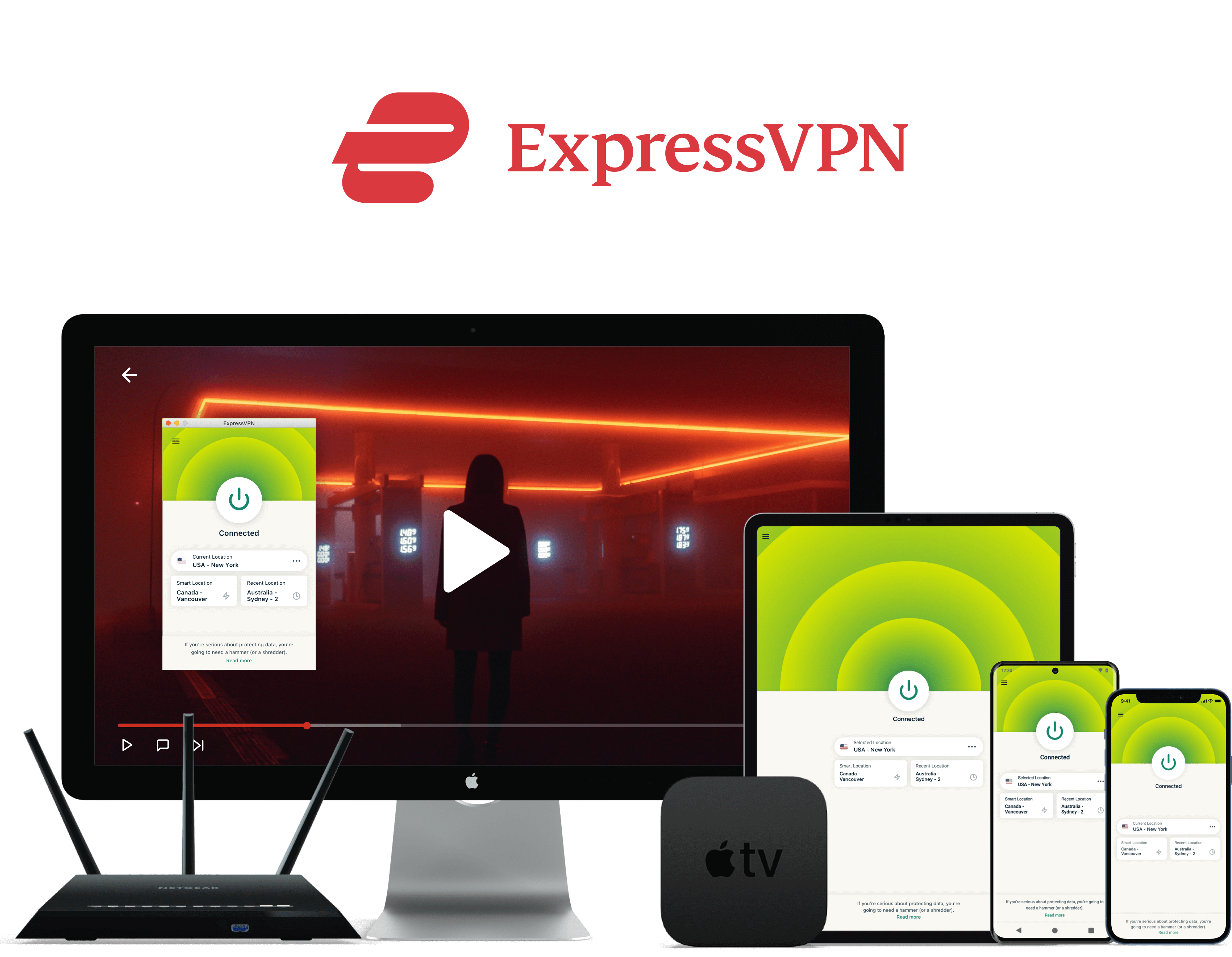
ExpressVPN’s major practical strength is its straightforward user experience.
The application generally makes it easy to connect, change locations, and access supported privacy settings. Users do not need to understand routing protocols to get started.
This matters because security software is only useful when people can operate it correctly. A complicated tool that is frequently disabled may provide less practical protection than an easy-to-use tool that remains active.
ExpressVPN supports a broad range of common operating systems and offers additional products for compatible routers and other supported devices. However, features differ across platforms and subscription offerings.
Does ExpressVPN justify its premium price in 2026?
The answer depends on your priorities.
If you want an established service with a polished interface, broad location coverage, responsive connections, and a conventional VPN workflow, the additional cost may be worthwhile.
If your primary requirement is advanced resistance to traffic analysis, ExpressVPN’s premium price does not purchase the same type of protection as NymVPN’s Anonymous mixnet mode.
Similarly, if you only need basic encrypted browsing, you may find that a less expensive VPN meets your requirements.
The phrase “Costly Regrets” in this article’s title is therefore a warning against buying a premium subscription without evaluating your actual needs—not a claim that ExpressVPN is inherently poor value.
ExpressVPN pros and cons
Pros
- User-friendly applications for straightforward everyday protection.
- Lightway is designed for fast connection establishment and responsive performance.
- TrustedServer’s RAM-only architecture reduces persistent data-storage risks.
- Extensive advertised server-location coverage.
- Independent security assessments and publicly available audit information.
- A practical choice for streaming, travel, and general-purpose VPN use.
Cons
- Its conventional architecture does not provide Nym’s specific mixnet-based traffic-mixing design.
- Long-term subscription costs and renewal prices need careful checking.
- Streaming access can vary by platform, region, and server.
- VPN encryption does not make users anonymous to websites where they sign in.
- Advanced privacy requirements may call for additional tools and operational precautions.
Who should buy ExpressVPN?
ExpressVPN is a sensible choice for users who want to connect once and carry on with their day. It prioritizes the conventional VPN experience rather than making advanced anonymity techniques the central feature.
Recommended for: Everyday users who prioritize convenience, speed, broad compatibility, and reliable conventional VPN protection.
5. Head-to-Head Comparison: Four Critical Buying Factors
Pillar 1: Privacy and anonymity — Metadata protection vs. standard encryption
Privacy is where NymVPN and ExpressVPN differ most fundamentally.
ExpressVPN encrypts the connection between your device and the VPN server, hides your public IP address behind the VPN exit address, and uses infrastructure designed to support its privacy commitments. Its no-logs claims and TrustedServer architecture are supported by independent assessments.
For most people, these protections are valuable. They help reduce exposure to untrusted Wi-Fi networks and prevent local network operators from easily inspecting the contents of encrypted traffic.
However, a conventional VPN server must process enough routing information to deliver your traffic. A provider’s no-logs policy and technical controls are therefore important parts of the trust relationship.
NymVPN’s Anonymous mode changes the routing model. Instead of relying on one conventional VPN tunnel, it sends traffic through a decentralized five-hop mixnet. Traffic mixing, fixed-size packets, cover traffic, and randomized delays are intended to make it harder to connect a sender with a destination by examining traffic patterns.
This does not make surveillance mathematically impossible, nor does it eliminate endpoint, browser, or account-based tracking. It does, however, provide a distinct architectural defense against certain forms of traffic analysis.
Winner for metadata-focused anonymity: NymVPN Anonymous mode.
Winner for conventional, easy-to-use privacy protection: ExpressVPN.
If your main concern is routine security on public Wi-Fi, ExpressVPN may be sufficient. If you specifically want to reduce the linkability of communication patterns, NymVPN offers the more relevant technology.
Pillar 2: Speed and performance — Mixnet latency vs. Lightway
VPN speed is not just about the highest download number. Latency, connection stability, upload performance, and the distance to the exit server also influence the experience.
ExpressVPN’s Lightway protocol is designed for fast connection establishment and low-latency conventional VPN use. Its performance will still vary depending on your internet connection, selected location, device, and network congestion.
NymVPN needs to be evaluated in two separate categories.
Fast mode uses a two-hop decentralized VPN connection and is designed for everyday traffic. It is the more appropriate choice when browsing, downloading, or streaming requires responsiveness.
Anonymous mode deliberately adds network operations that conventional VPN protocols are not designed to perform in the same way. Packets are mixed and delayed, and cover traffic consumes additional bandwidth. Those mechanisms can make communication patterns harder to trace, but they also create a performance cost.
The important distinction is that this slowdown is not simply a sign of poor engineering. Some of it is an intentional consequence of the anonymity design.
That said, the degree of slowdown depends on configuration and network conditions. Do not assume every NymVPN connection is slow, or that every ExpressVPN connection will be faster in every location.
Winner for conventional low-latency use: ExpressVPN is the safer default recommendation.
Winner for adjustable anonymity-first routing: NymVPN.
For gaming, real-time calls, and responsive browsing, choose a conventional fast connection. For communication where resistance to traffic analysis outweighs latency, consider NymVPN’s Anonymous mode.
Pillar 3: Streaming and torrenting capabilities
Streaming services often restrict content by country, account, licensing arrangements, and IP address. A VPN may help access a different regional catalog, but no provider can guarantee that every service will work continuously.
ExpressVPN is generally the more practical option for people who regularly watch streaming platforms while traveling or want a conventional VPN for home entertainment. Its location coverage and familiar connection model suit these activities, although individual services can still block VPN traffic.
NymVPN’s Fast mode may be useful for streaming, but its decentralized infrastructure can create variability in available exit locations and streaming compatibility. Anonymous mode is not the sensible default for video streaming because its traffic-mixing design can introduce substantial latency and throughput overhead.
Torrenting requires a similarly careful distinction.
ExpressVPN’s conventional VPN connection is better suited to sustained file transfers, assuming the selected location, application, and local rules permit the activity. Users should verify current peer-to-peer guidance and use a kill switch where available.
NymVPN Fast mode may be suitable for some peer-to-peer transfers. Anonymous mode, however, is generally a poor fit for large, time-sensitive downloads because latency and bandwidth overhead can undermine performance.
Neither VPN makes illegal downloading lawful, and neither guarantees complete anonymity against every observer. Users should respect copyright rules and verify the provider’s current terms.
https://finbytehub.com/bitdefender-vs-mcafee-in-2026/: NymVPN vs ExpressVPN (2026): The Ultimate Battle of Ultimate Privacy vs Costly RegretsWinner for streaming: ExpressVPN.
Winner for conventional high-bandwidth transfers: ExpressVPN is the more practical default.
Privacy-focused alternative: NymVPN Fast mode, where its available network locations and compatibility meet your requirements.
Pillar 4: Pricing, plans, and value for money
Price comparisons should focus on what you receive, not just the advertised monthly equivalent.
NymVPN has advertised a one-year plan at $48 total, equivalent to $4 per month at that offer. Its available plans, trial eligibility, supported devices, payment options, and promotions may change, so verify the actual checkout amount and renewal terms before purchasing.
ExpressVPN is positioned as a premium conventional VPN. Its pricing depends on the subscription length, promotional offer, country, and product tier. Longer commitments may reduce the effective monthly cost, but the upfront payment and renewal price deserve attention.
It would be misleading to declare a universal price winner without comparing the current offers available to the same customer on the same date.
There is also an important value distinction: the services are not selling precisely the same thing.
ExpressVPN’s value lies in its conventional VPN experience, speed-oriented protocol, broad location coverage, and usability. NymVPN’s differentiator is its decentralized routing and mixnet-based anonymity option.
If you never intend to use Anonymous mode, NymVPN’s unique feature may not be worth prioritizing. If metadata protection is central to your threat model, a conventional VPN’s lower latency may not be the deciding factor.
Winner for straightforward conventional VPN value: Depends on the current offer and your usage.
Winner for access to a dedicated metadata-protection mixnet: NymVPN.
Best buying advice: Compare the total amount charged today, the renewal price, device limits, supported platforms, and refund terms. Do not purchase a multiyear plan simply because its displayed monthly price looks attractive.
6. Final Verdict: Which VPN Should You Buy in 2026?
After comparing architecture, privacy, speed, streaming, and cost, the decision comes down to a simple question: What are you trying to protect yourself against?
NymVPN and ExpressVPN are both designed to improve online privacy, but their most important strengths are different.
Buy NymVPN if privacy is your highest priority
Choose NymVPN if you want more than conventional IP masking and encrypted traffic. Its Anonymous mode uses a decentralized mixnet, traffic mixing, cover traffic, and randomized delays to make communication patterns more difficult to analyze.
It is particularly worth considering for privacy-focused users who understand the speed trade-offs and are willing to prioritize anonymity over responsiveness.
Remember that NymVPN Fast mode and Anonymous mode provide different performance and privacy characteristics. Select the mode that fits your activity.
Buy ExpressVPN if convenience matters most
Choose ExpressVPN if you want a polished, straightforward VPN for everyday browsing, travel, streaming, and general network protection.
Lightway, TrustedServer, broad location coverage, and independent audit information make it an attractive option for people who prefer a conventional VPN that requires little technical knowledge.
The premium price is justified only if those practical advantages matter to you. If they do not, compare lower-cost alternatives before committing.
Our final recommendation
For metadata-focused anonymity, NymVPN is the more distinctive choice because its Anonymous mode is designed specifically to resist traffic analysis.
For everyday convenience, streaming, and conventional VPN use, ExpressVPN is the more practical default.
Neither product is universally superior. The right choice depends on your threat model, budget, devices, and tolerance for latency.
Before purchasing, review the current plan, privacy policy, supported platforms, and refund conditions. If you use affiliate links, compare the products objectively and disclose any commission you may earn.
Editorial disclosure: This article may contain affiliate promotions. FinByteHub may earn a commission if readers purchase through qualifying affiliate links, at no additional cost to them. Product features and prices can change; verify the latest details before buying.
Frequently Asked Questions
1. Is NymVPN better than ExpressVPN for privacy?
NymVPN’s Anonymous mode is designed to provide stronger protection against certain forms of traffic analysis through decentralized routing, packet mixing, and cover traffic. ExpressVPN provides conventional VPN privacy protections, including encryption, IP masking, and RAM-only server technology. The better choice depends on the specific threats you want to address.
2. Is NymVPN faster than ExpressVPN?
There is no universal answer. NymVPN Fast mode is designed for everyday performance, while Anonymous mode deliberately introduces additional routing and traffic-mixing overhead. ExpressVPN’s Lightway protocol is designed for responsive connections. Actual results depend on your network, location, and configuration.
3. Can I use NymVPN for Netflix?
NymVPN Fast mode may work with some streaming services, but compatibility can vary by region and platform. Anonymous mode is generally less suitable for streaming because of its latency and bandwidth trade-offs. Check current compatibility before subscribing primarily for streaming.
4. Does ExpressVPN hide metadata?
ExpressVPN encrypts VPN traffic and hides your public IP address from destination websites behind its VPN exit address. However, conventional VPN routing does not provide the same packet-mixing and cover-traffic protections as NymVPN’s Anonymous mode. Metadata exposure depends on the observer, protocol, application, and network design.
5. Which VPN is cheaper in 2026?
NymVPN has advertised an annual plan at $48 total, or $4 per month at that offer. ExpressVPN pricing varies by plan, promotion, and region. Check both providers’ current checkout prices for the total upfront payment, renewal terms, and any applicable taxes.
6. Is either VPN completely anonymous?
No VPN can guarantee complete anonymity. Websites can identify logged-in users, browser fingerprints can reveal information, and malware or compromised devices can expose activity. VPNs reduce particular risks, but strong privacy requires a broader approach to account security, device security, and online behavior.
7. Are there good ExpressVPN alternatives?
Yes. Depending on your needs, you can compare NymVPN, Proton VPN, Mullvad, and other established providers. Evaluate independent audits, privacy policies, connection speeds, platform support, pricing, and the specific threat model each service addresses rather than choosing solely by brand reputation.
Final takeaway: NymVPN is the more specialized choice for metadata-focused anonymity, while ExpressVPN is the more straightforward choice for conventional everyday VPN protection. Buy according to your actual privacy requirements—not fear-based marketing or the size of a discount.
